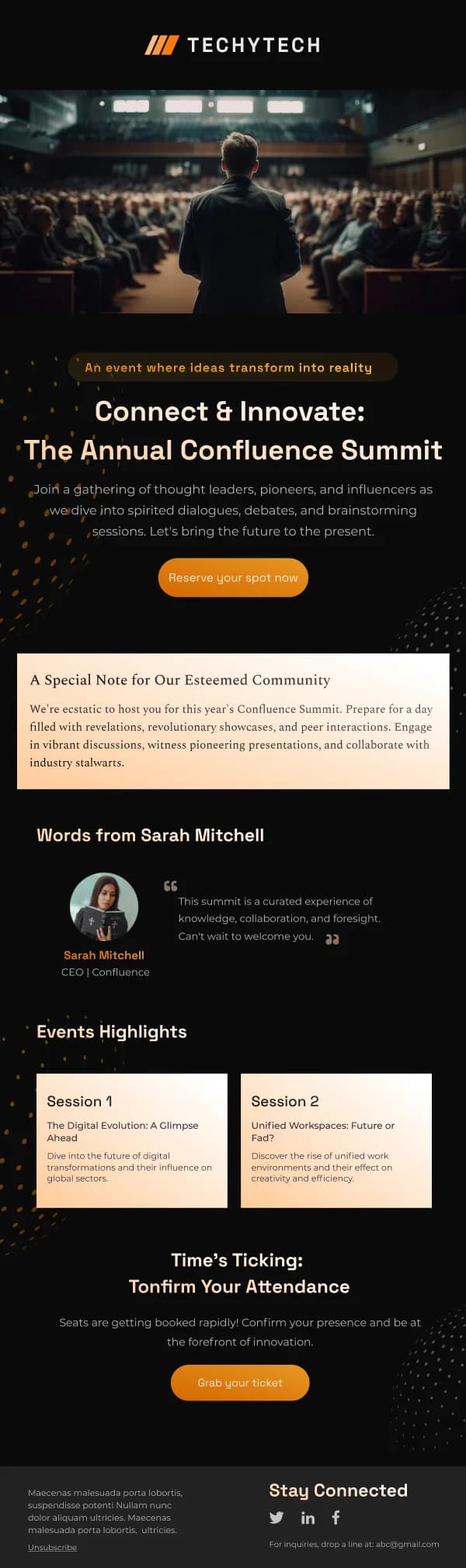
Event email is a logistics problem dressed as a marketing one. An invitation can
be beautiful and still fail because the reader could not tell whether the event
clashed with something, how long it would take, or whether it was for them.
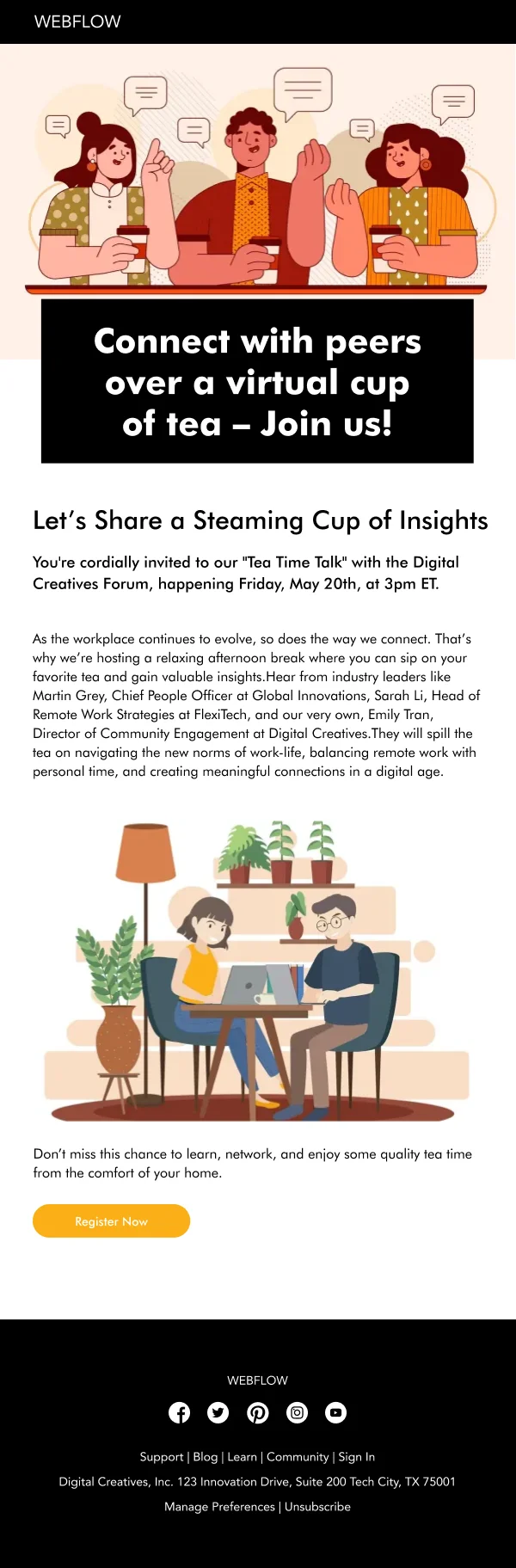
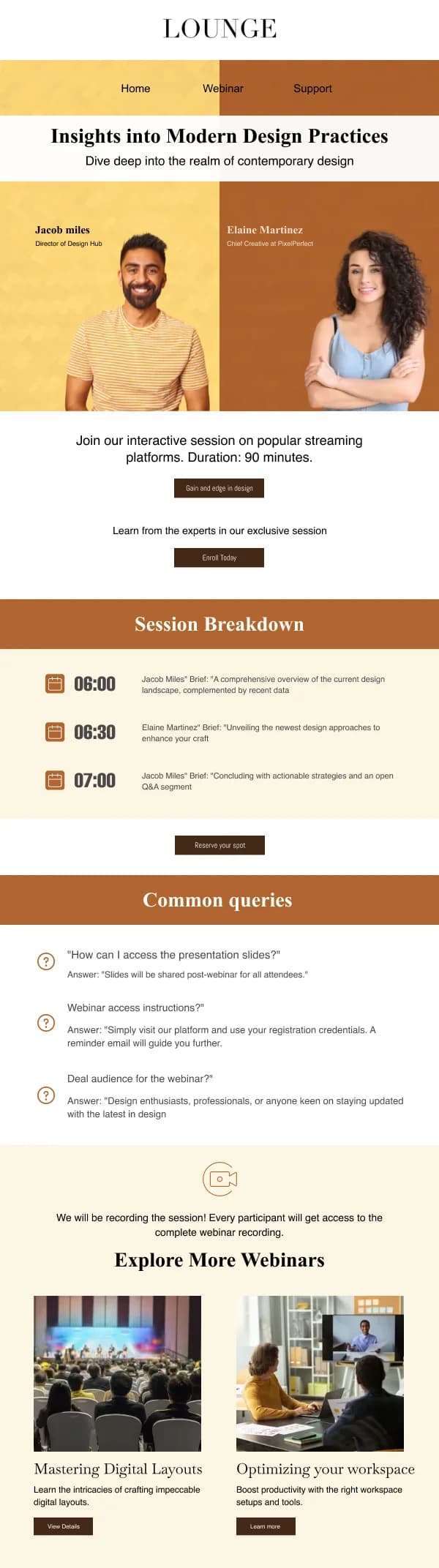
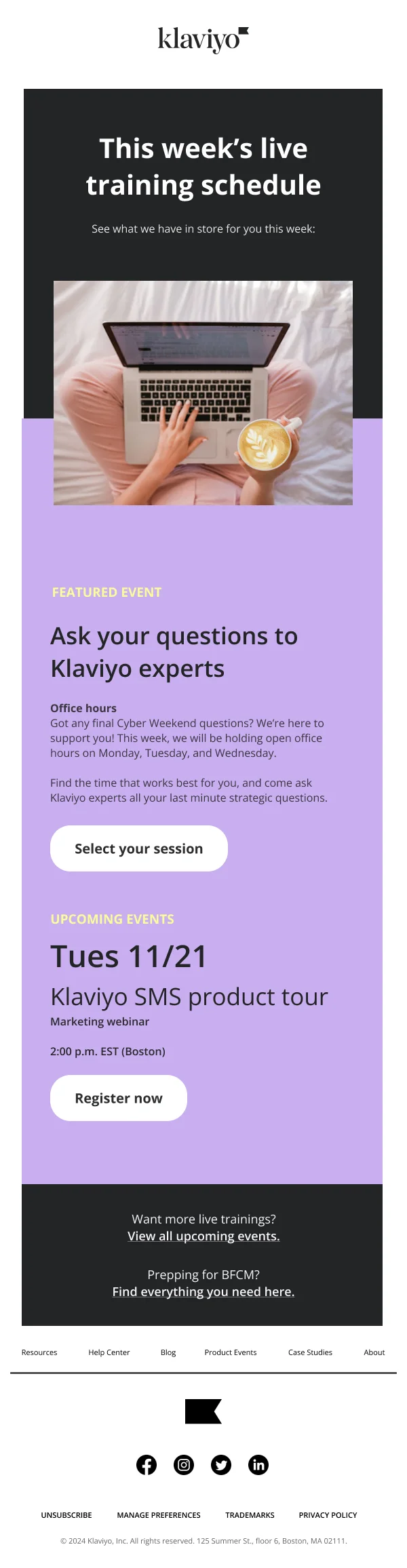
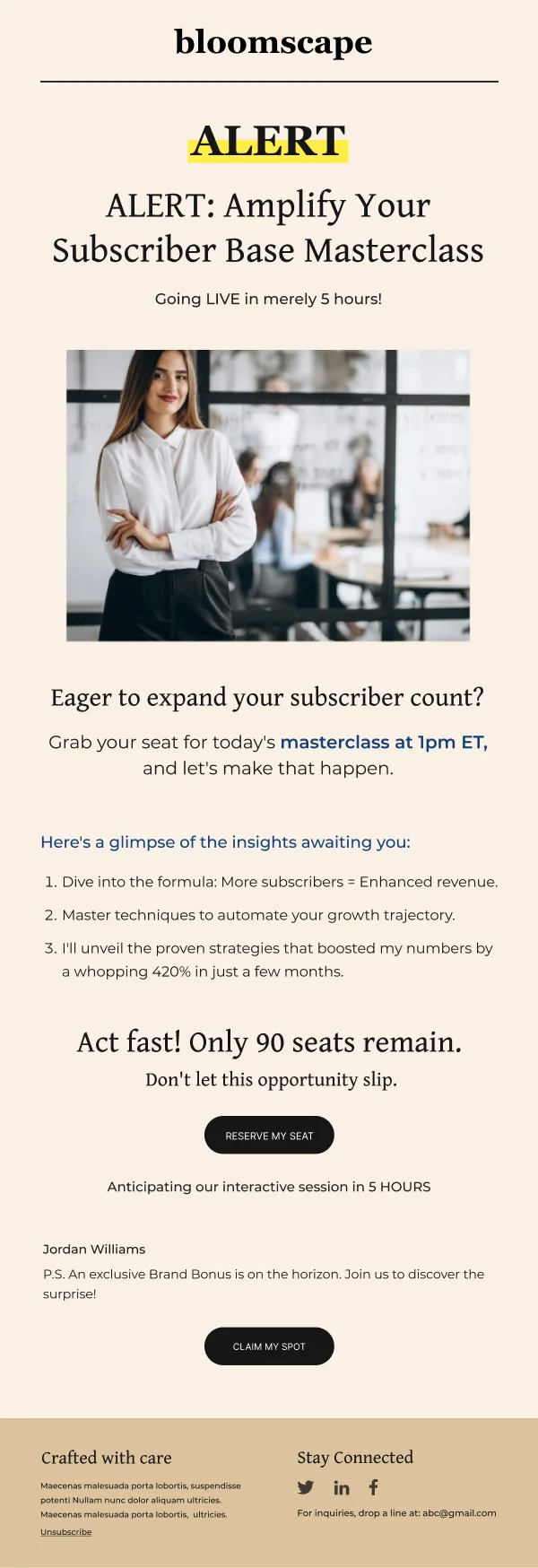
The 29 designs in this collection put those facts where they cannot be missed.
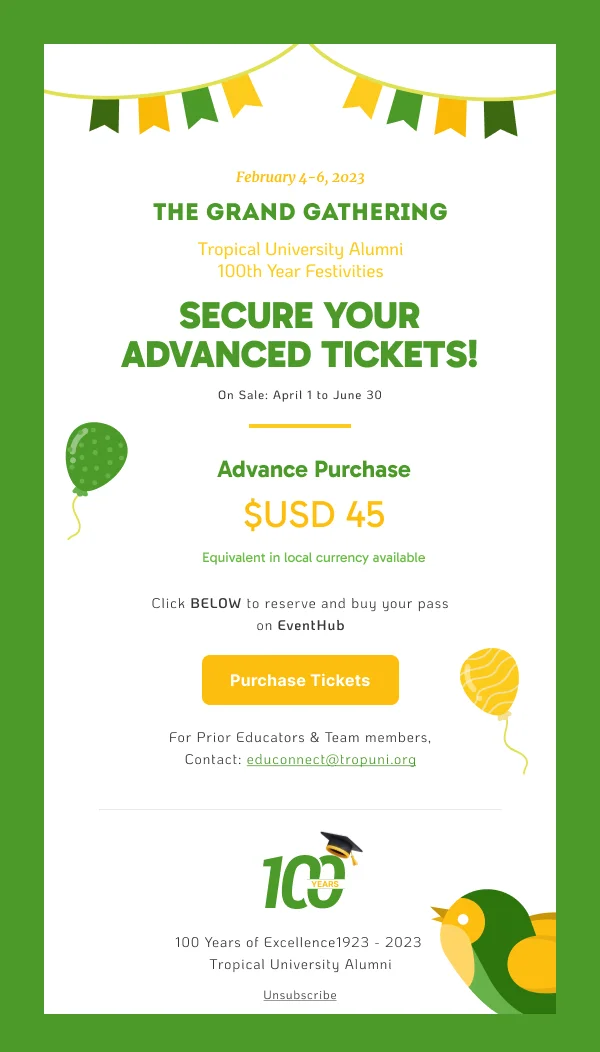
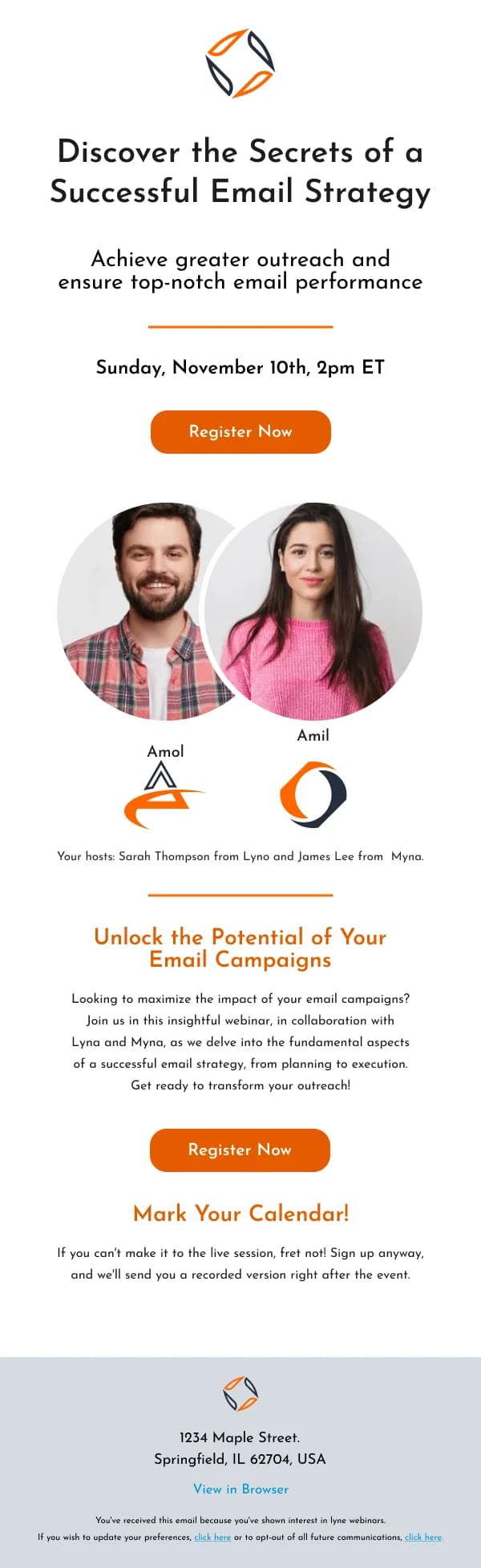
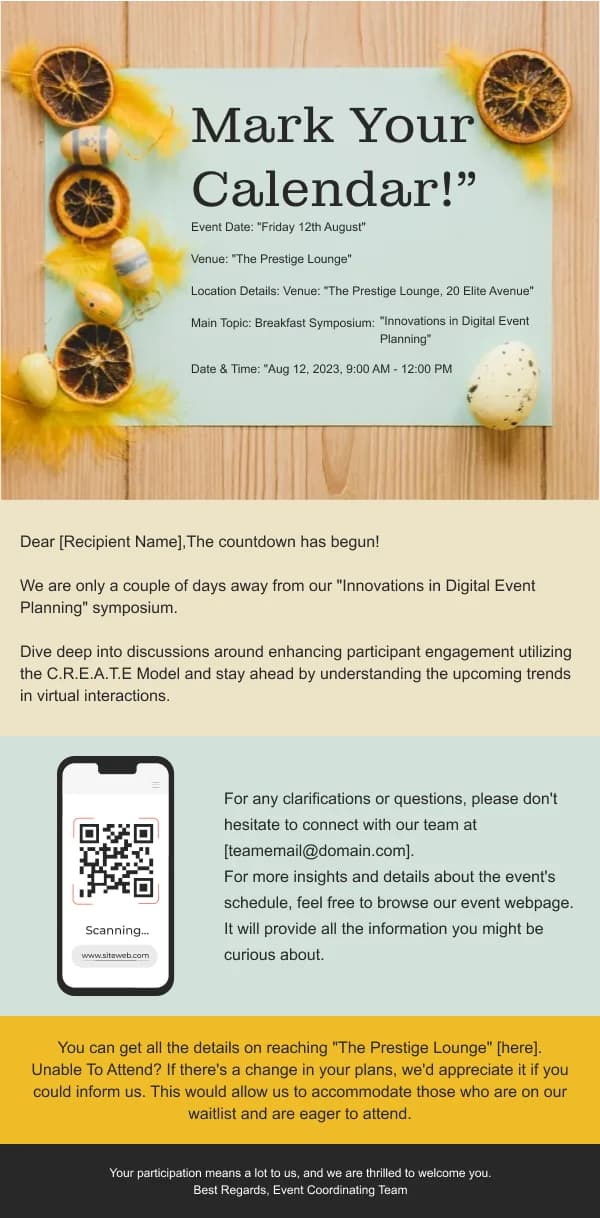
The detail block
Every invitation in this collection has a slot for the facts, treated as a
designed element rather than a paragraph:
- Date, with the month in words and the day of the week.
- Start time and duration. Duration is the most commonly omitted and most
needed detail.
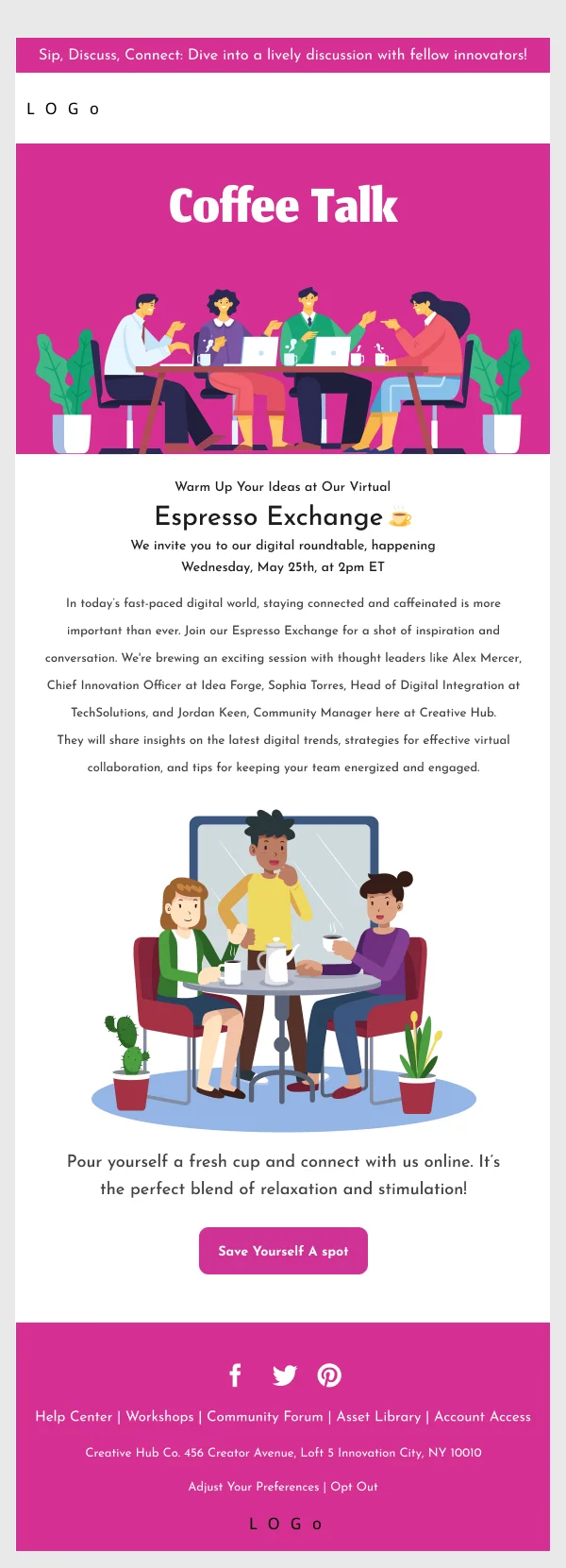
- Time zone, for anything online. Non-negotiable.
- Location with a map link, or the platform for an online event.
- Cost, including free stated explicitly.
- Who it is for, in a short line. This is what stops the wrong people
registering and the right people assuming it is not for them.
Sell the outcome, not the schedule
Above the detail block, the persuasion is short: what the attendee will leave
with. Three lines. A timed agenda is not a reason to attend; it is a reason to
check for a clash.
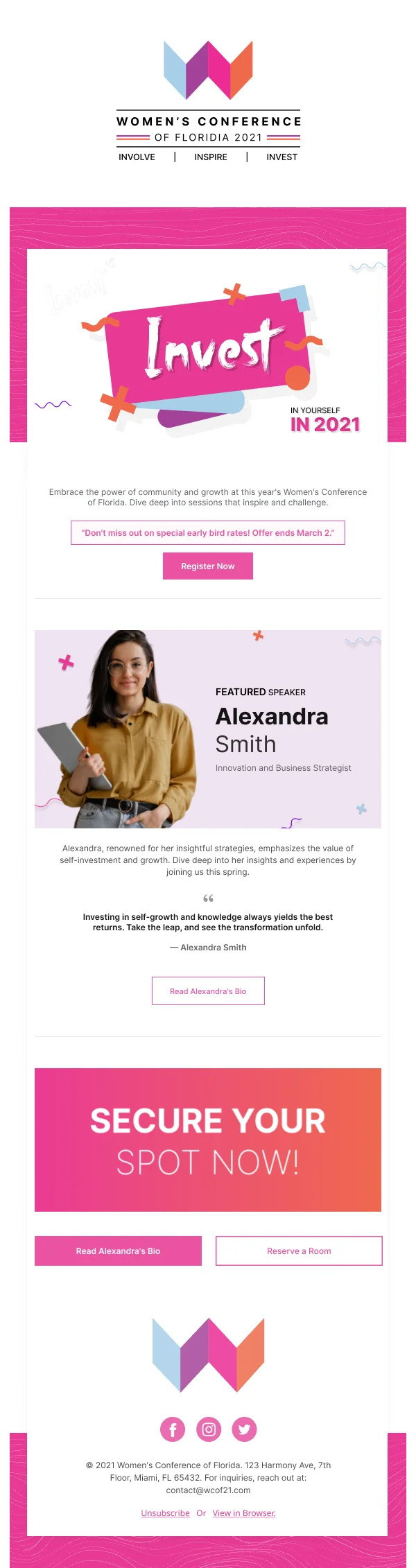
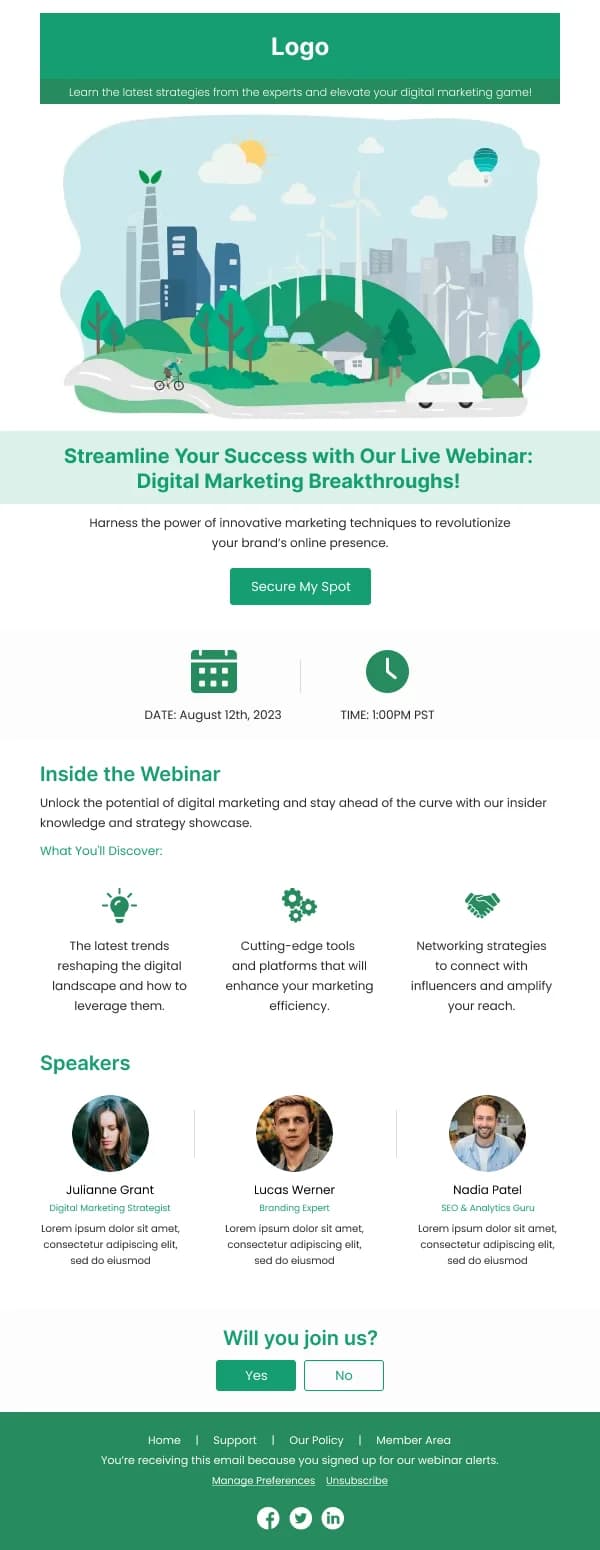
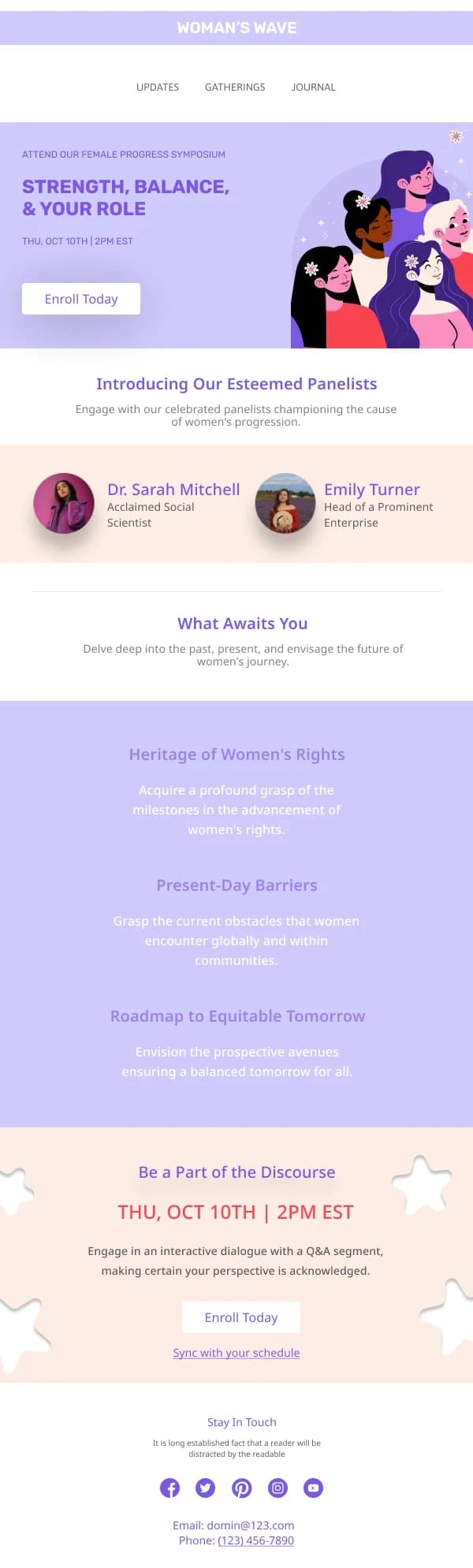
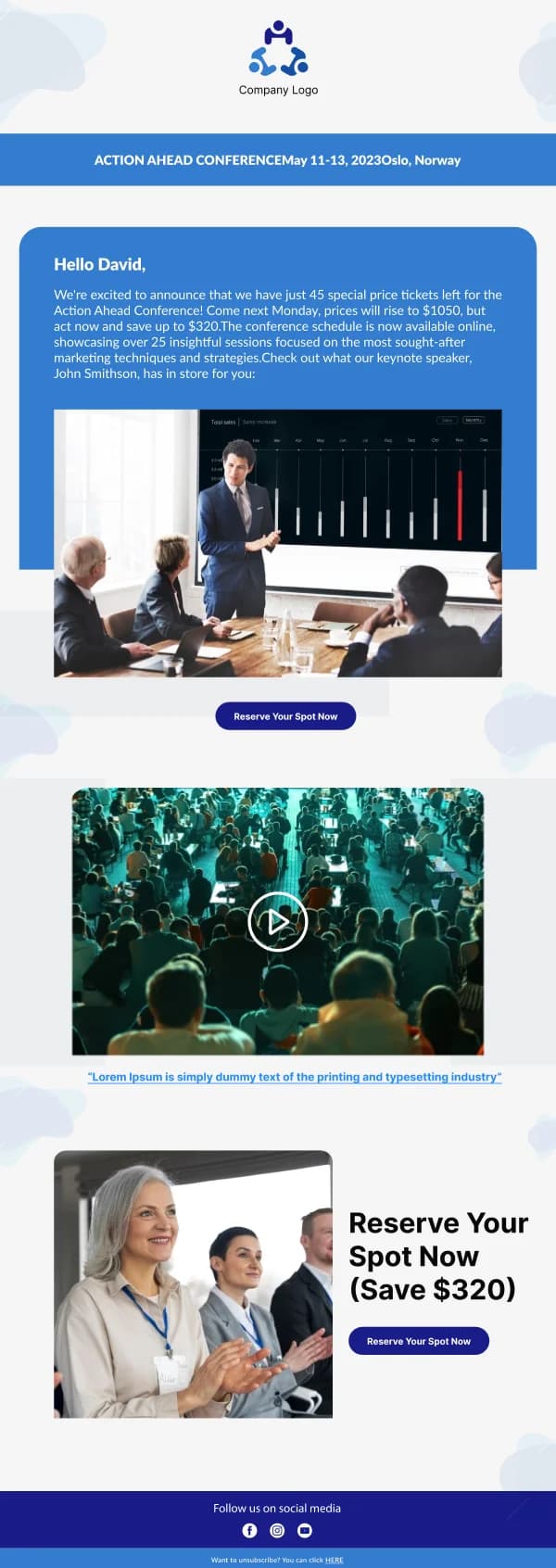
Where speakers are the draw, a compact row of names, roles and photographs does
more than a paragraph about each.
The confirmation is the most important send
A registration confirmation is opened and often kept, and it should carry
everything needed to attend without hunting:
- The full detail block again.
- A calendar file or add-to-calendar link.
- The joining link for online events, prominently.
- A way to cancel or transfer.
The single biggest cause of no-shows for online events is a joining link buried in
an email from three weeks earlier.
Reminders
A day ahead and an hour ahead, both leading with the time and the joining route
rather than re-selling the event. Short. The persuasion is finished; these are
logistics.
Follow-up
After the event: thanks, the recording or materials, and the next date. Sent within
a day or two, while it is still fresh. This is also the natural place for a
feedback request, kept to one or two questions.
Using these templates
The detail block — date, duration, time zone, location — is a component, so it stays complete when you reuse it. Checks: does the email state
duration and time zone, is the detail block scannable, does the confirmation carry
the joining link prominently, and is there a cancellation route.
Common questions
- What must an invitation include?
- What it is, when, where, how long, who it is for, and how to register. The one most often missing is duration, and it is the detail people need in order to decide whether they can come.
- Should the invitation include the agenda?
- A summary, yes. A full agenda usually belongs on the registration page. Three lines describing what the attendee will get is more persuasive than a timed schedule, which reads as administration.
- How many reminders does an event need?
- Two after registration — a day ahead and an hour ahead — plus one final call before registration closes. Online events need the hour-ahead one more than in-person events do, because attendance is a decision rather than a journey.