A thank-you email has no functional job, which is precisely why it works. It is
one of the few emails a reader receives that is not trying to produce an outcome,
and the goodwill from that is real — provided the email is actually not trying to
produce an outcome.
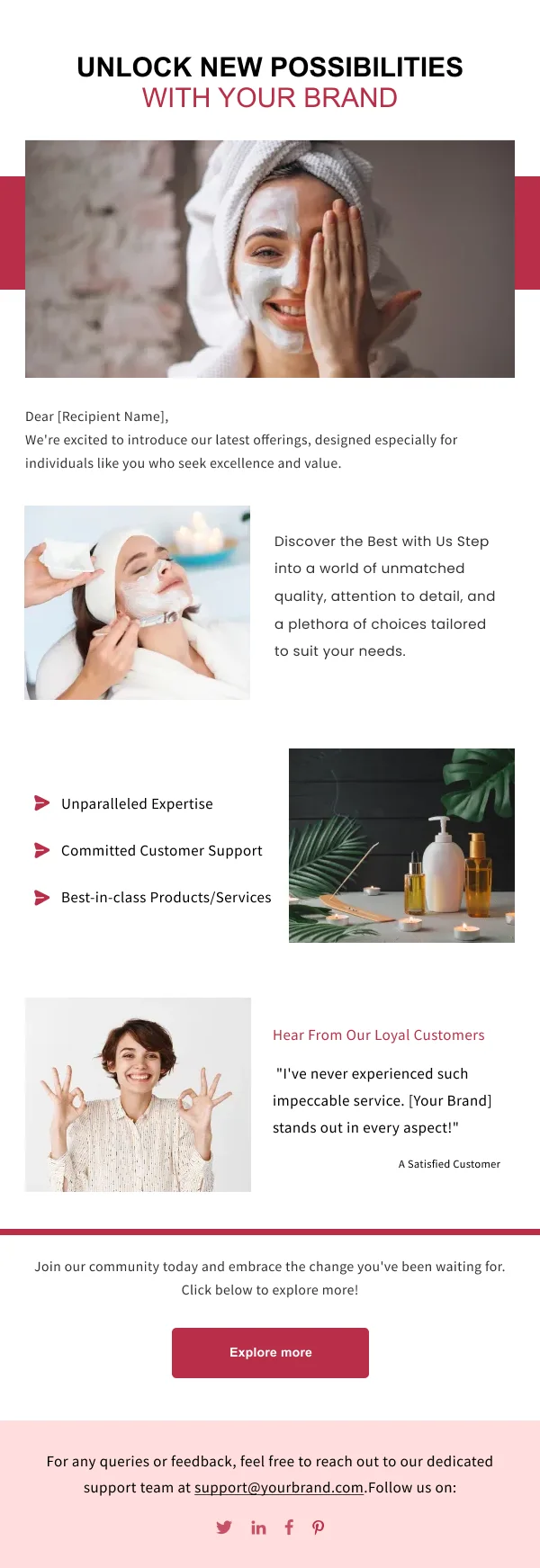
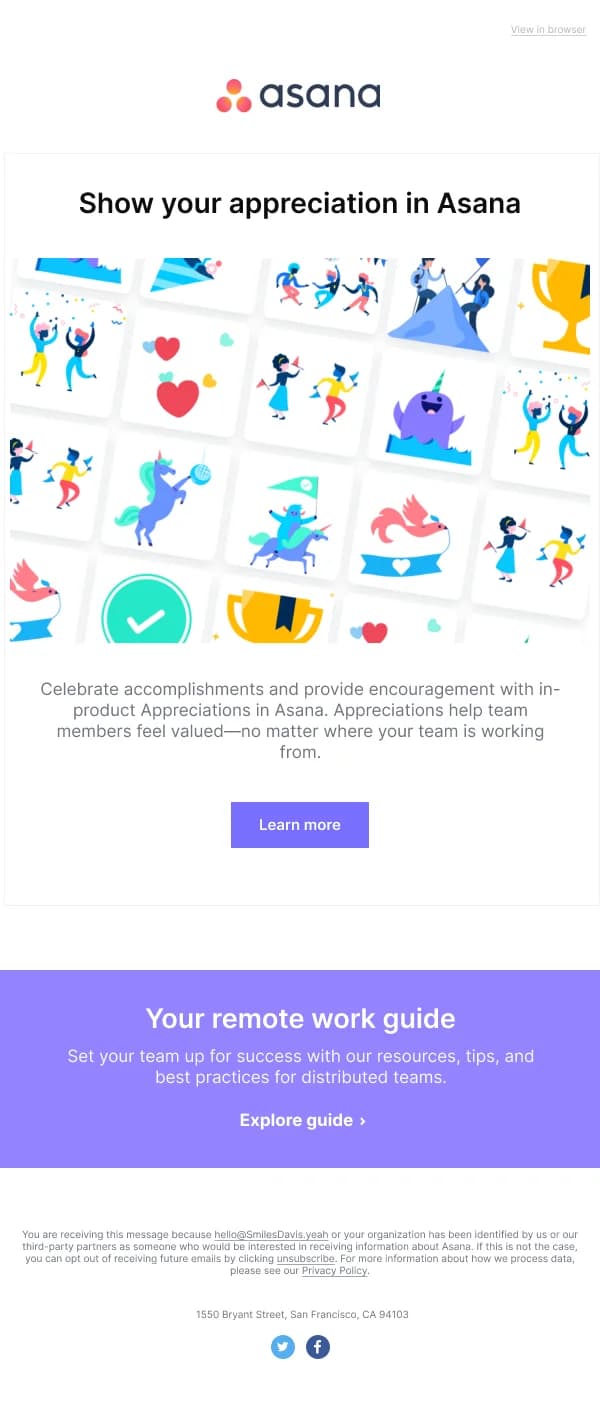
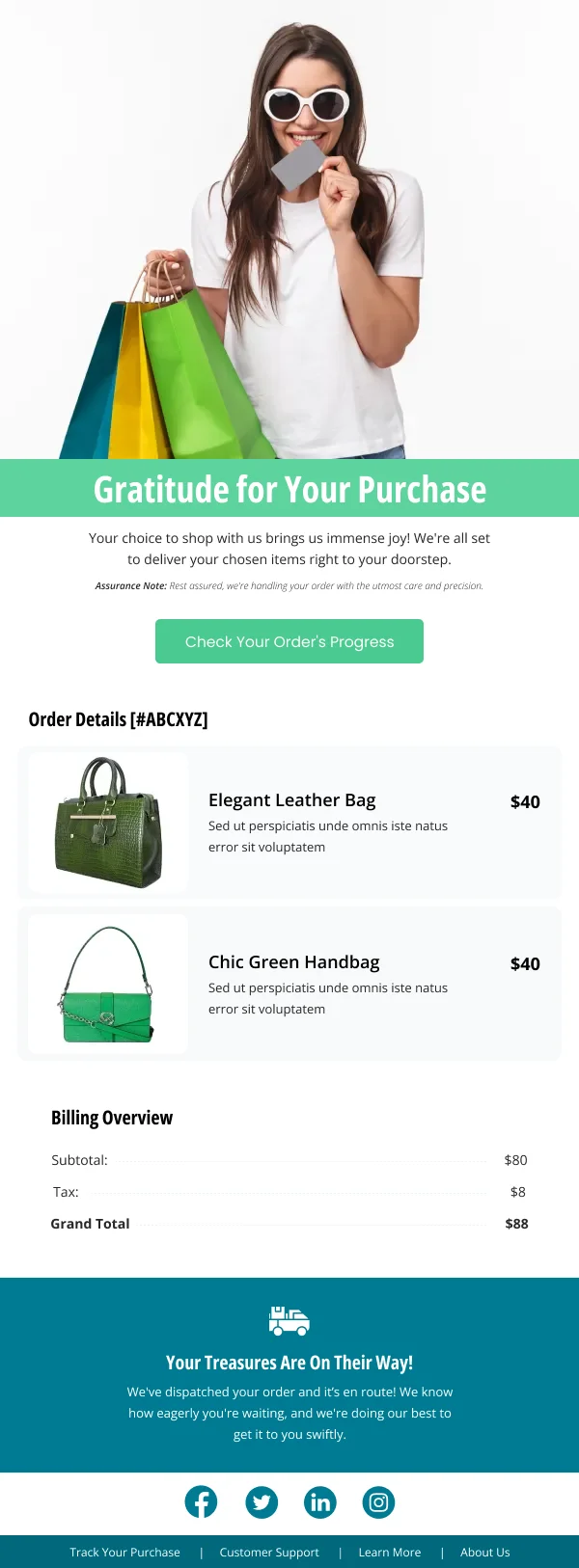
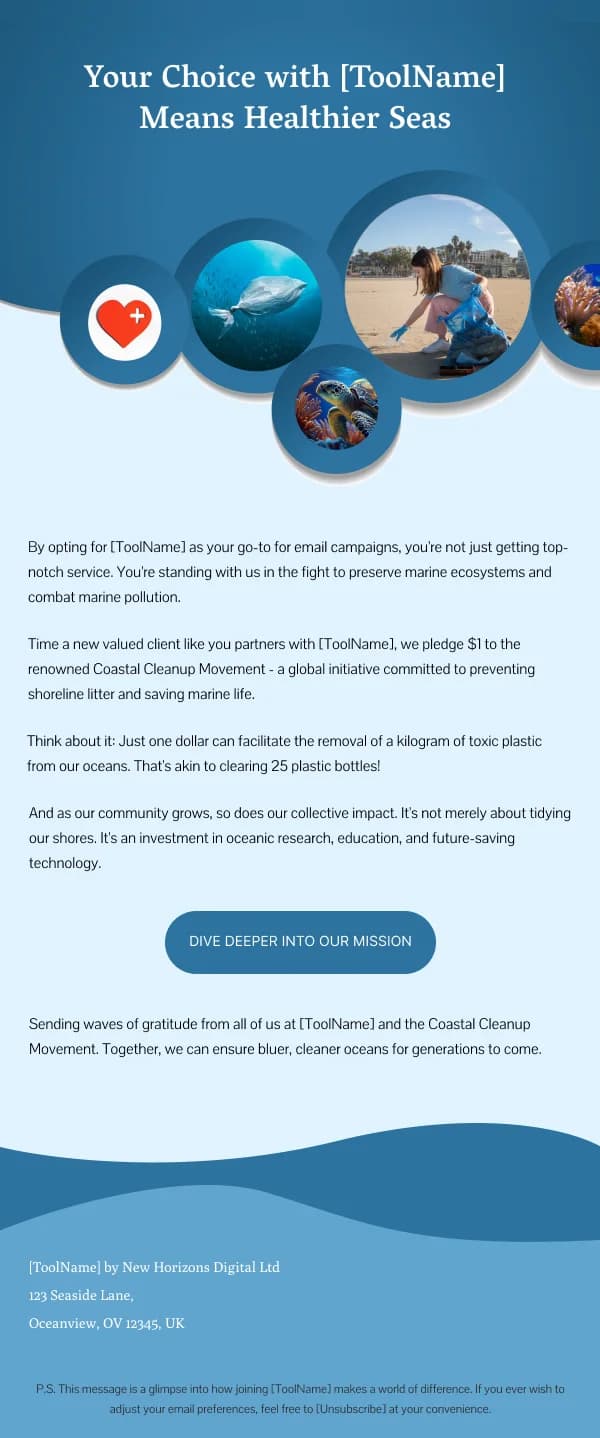
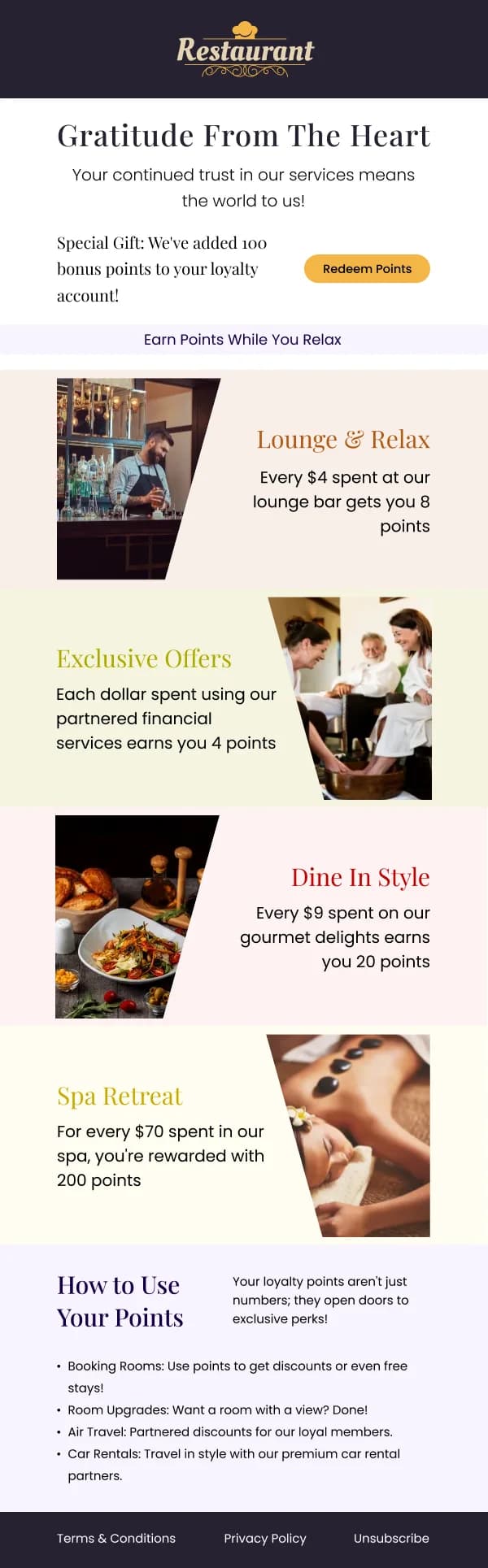
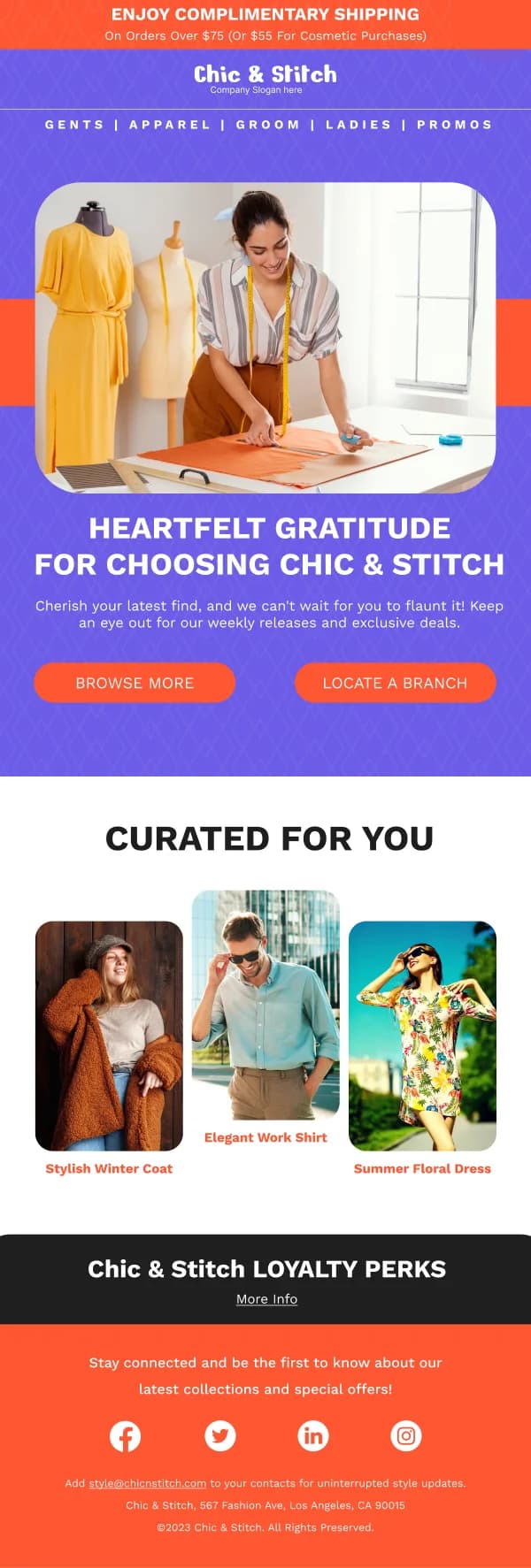
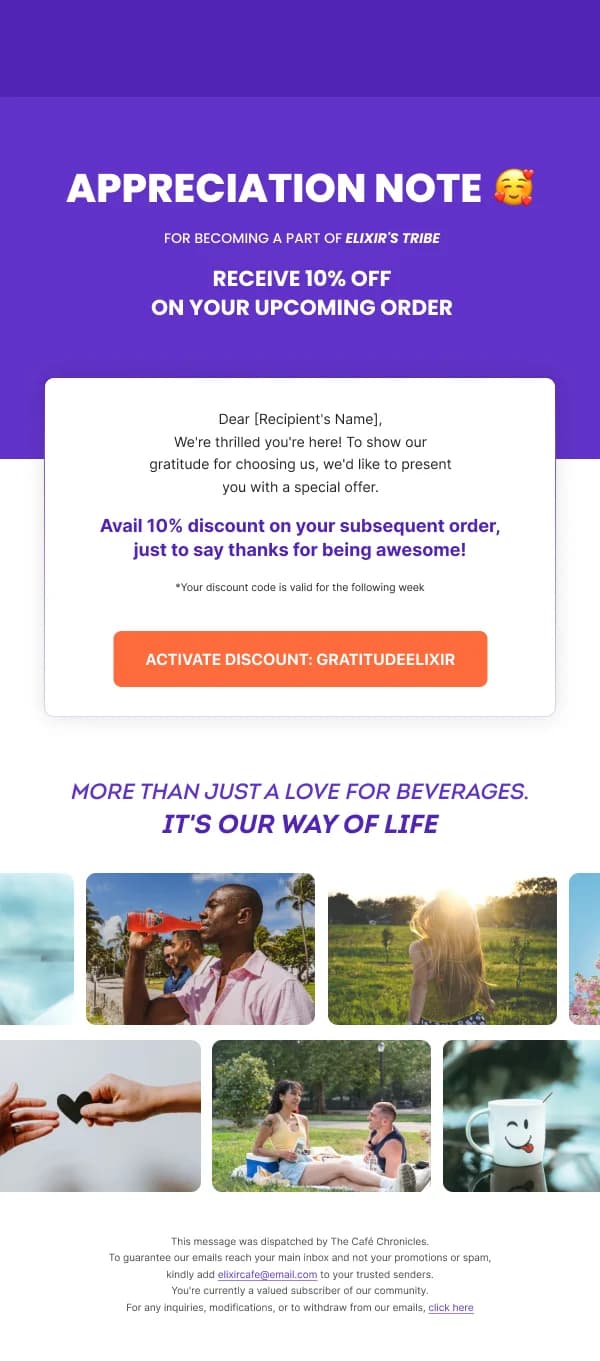
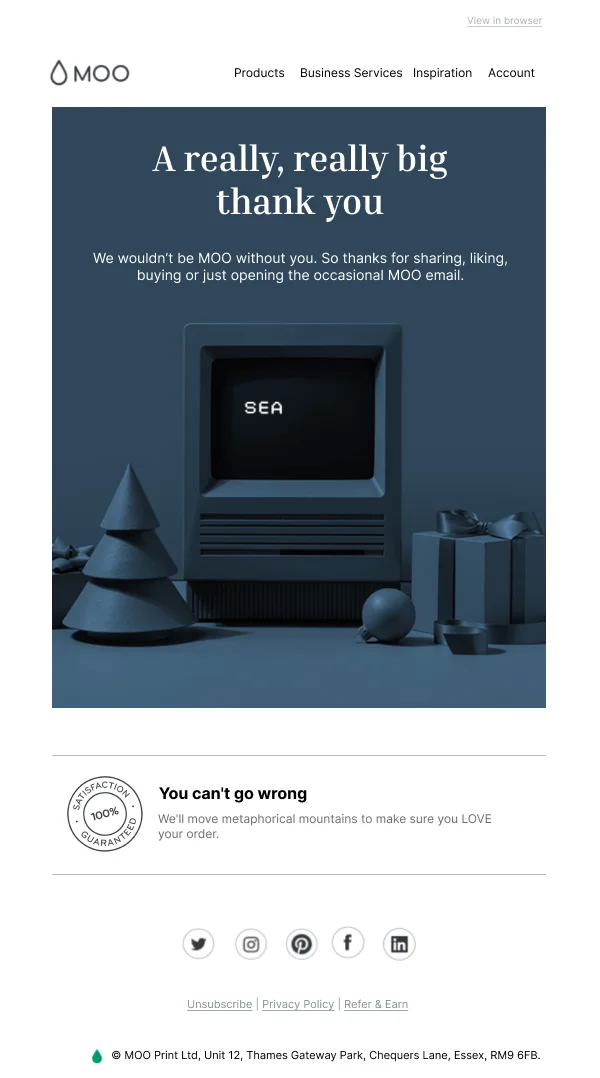
The 17 designs in this collection are deliberately restrained.
Be specific
The difference between a thank-you that lands and one that does not is almost
entirely specificity:
- Name the thing. The order, the event attended, the referral made, the years
subscribed.
- Where possible, name a consequence. What their order supported, what the event
achieved, what the feedback changed.
- Sign it as a person, from an address that accepts replies.
"Thank you for being a valued customer" is a template. "Thank you for your order —
it is the 500th we have packed this month" is a message.
Restraint in the design
These emails are short by nature, and the design should reflect that: one column,
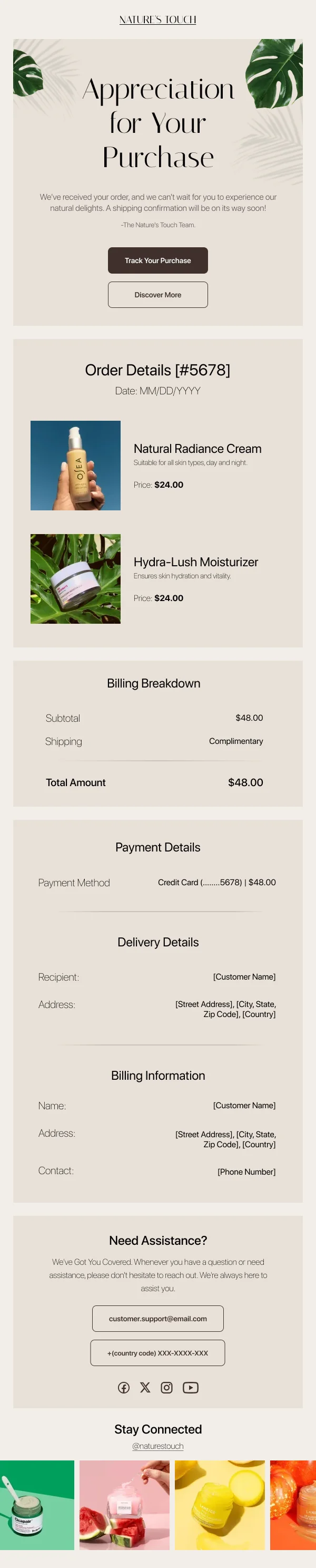
generous space, minimal imagery, no product grid. A thank-you with four product
cards underneath is a promotional email wearing a courtesy.
Where imagery helps, it is usually of the people or place involved rather than of
the product — the team, the venue, the workshop. Stock photography actively
undermines the message.
The soft ask
If something must be asked, keep it soft and put it at the end: a review request,
a social follow, a referral link. One, framed as optional, visually quieter than
the message itself.
Anything stronger belongs in its own send a few days later, where it can be direct
without borrowing the goodwill.
Post-event follow-ups
These have a bit more to carry — materials, recordings, slides, next dates — and
the shape that works leads with the thanks, then provides the resources as a short
list, then the next date if there is one. Resources first reads as logistics;
thanks first reads as a thank-you.
Using these templates
Short files with no product grid, because a thank-you that sells is not a thank-you. Checks: does the email name
the specific thing being thanked, is it signed by a person, does the reply address
work, and is there at most one soft ask, placed last.
Common questions
- Does a thank-you email need a call to action?
- It is stronger without one, or with a very soft one. The moment a thank-you asks for something, it becomes a request with a courtesy attached, and readers notice. If you need the action, send it separately.
- What makes a thank-you feel genuine rather than automated?
- Specificity. Naming what the reader actually did — the order, the event, the referral — rather than thanking them for being a valued customer. A named human sender and a working reply address do more than any visual treatment.
- When should it be sent?
- Close enough to the event that the reader remembers it. A thank-you for an event a fortnight later has become a newsletter.