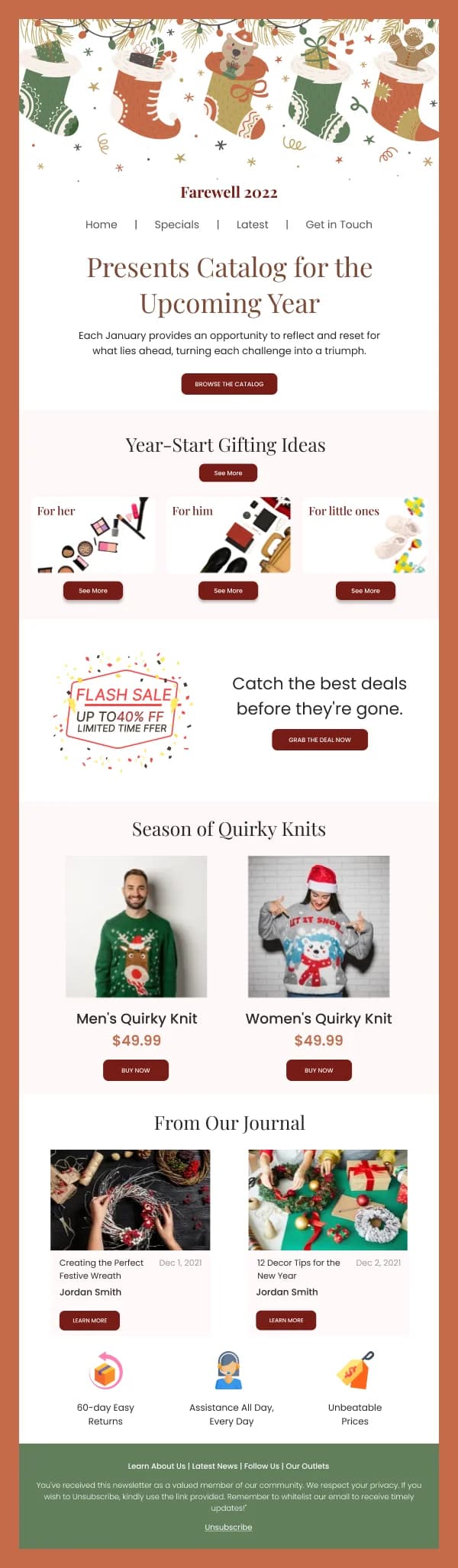
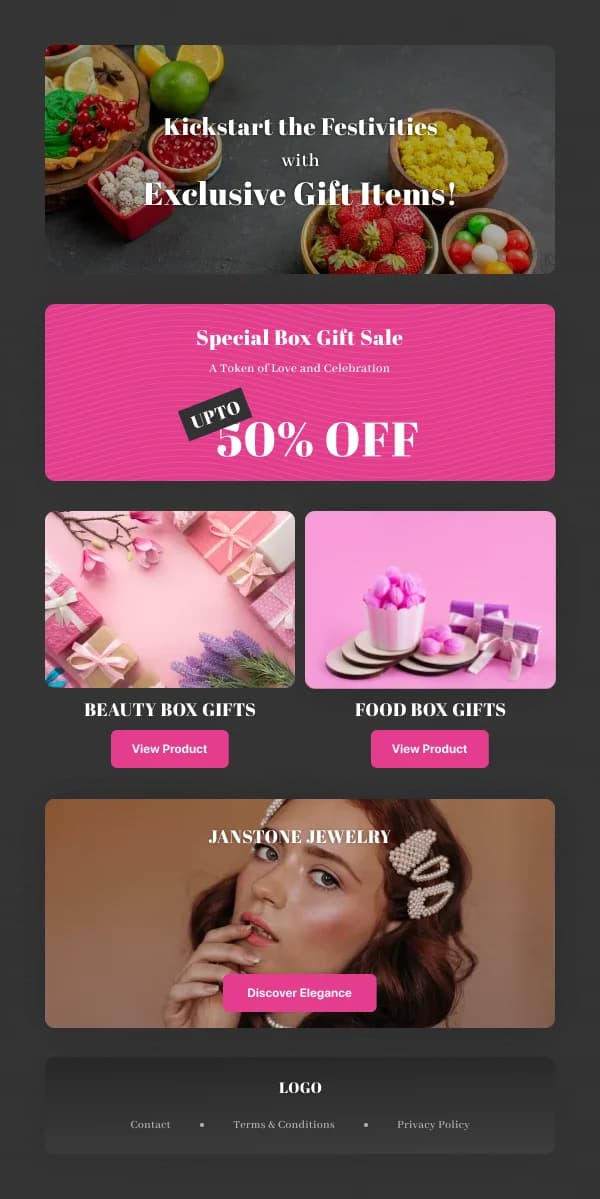
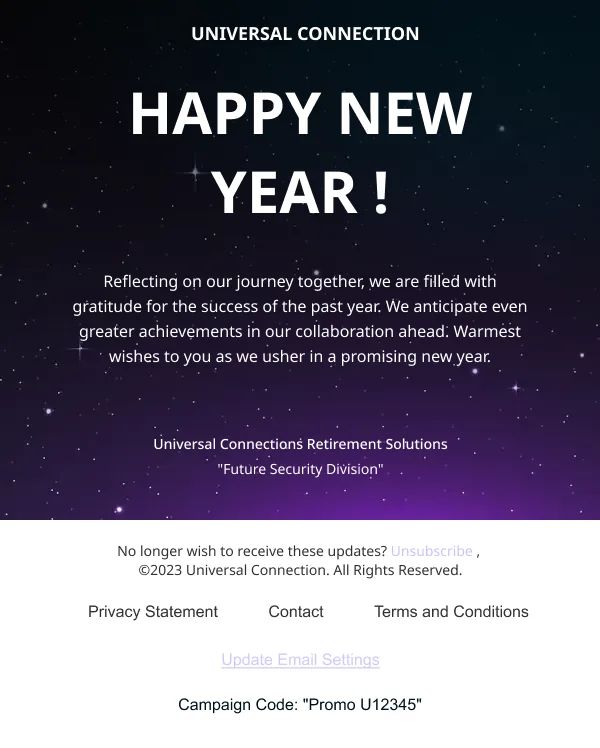
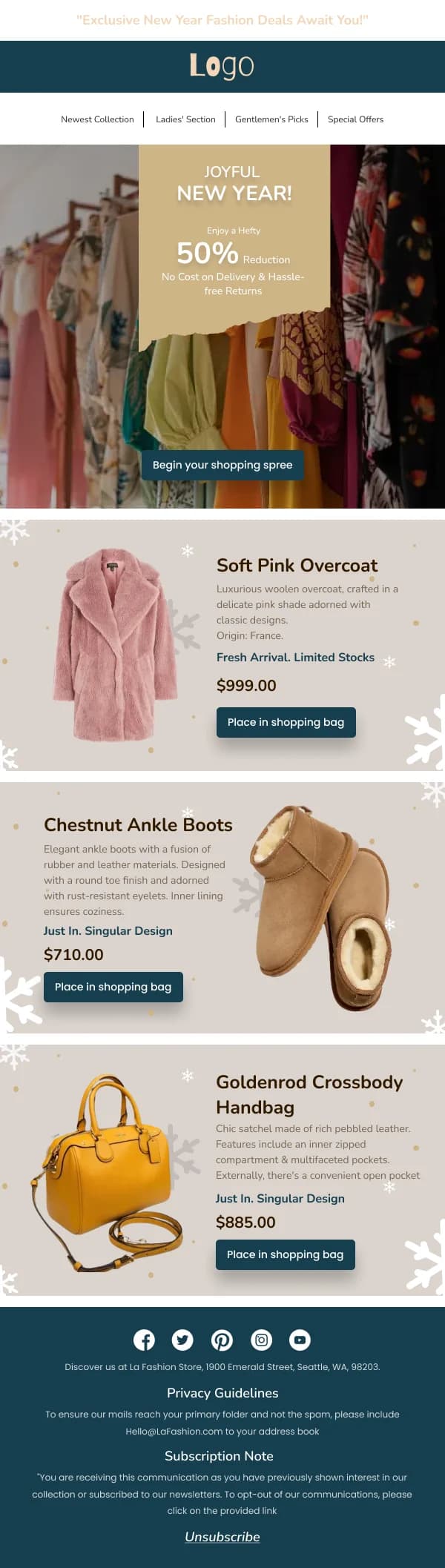
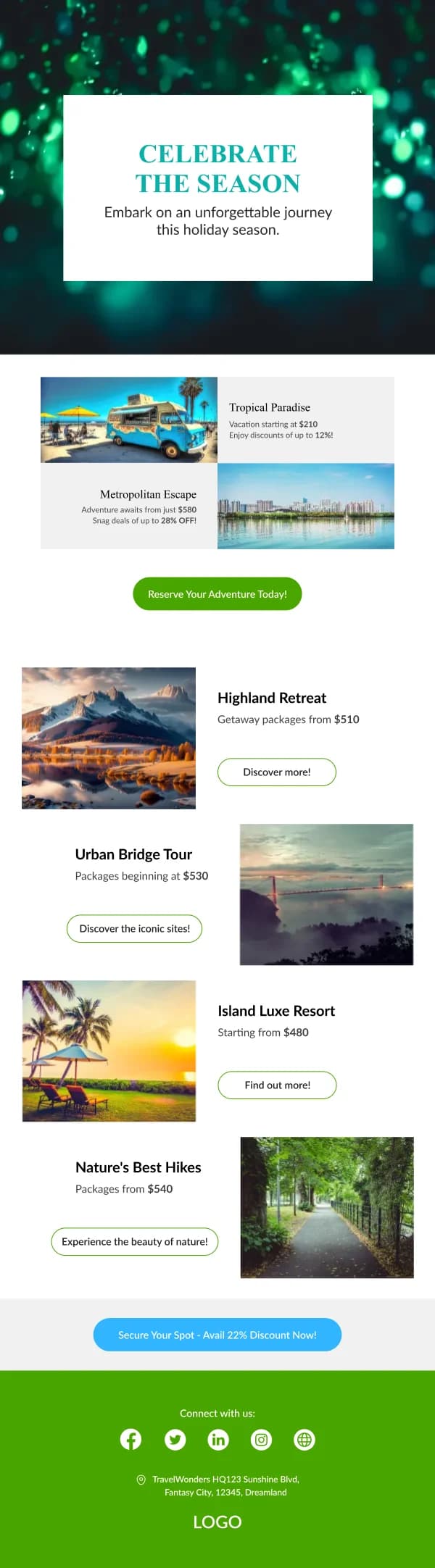
New Year covers two quite different sends that happen a week apart: a look back
that asks for nothing, and a look forward that usually asks for something. The 13
designs in this collection separate them rather than blending them into one
message.
The year in review
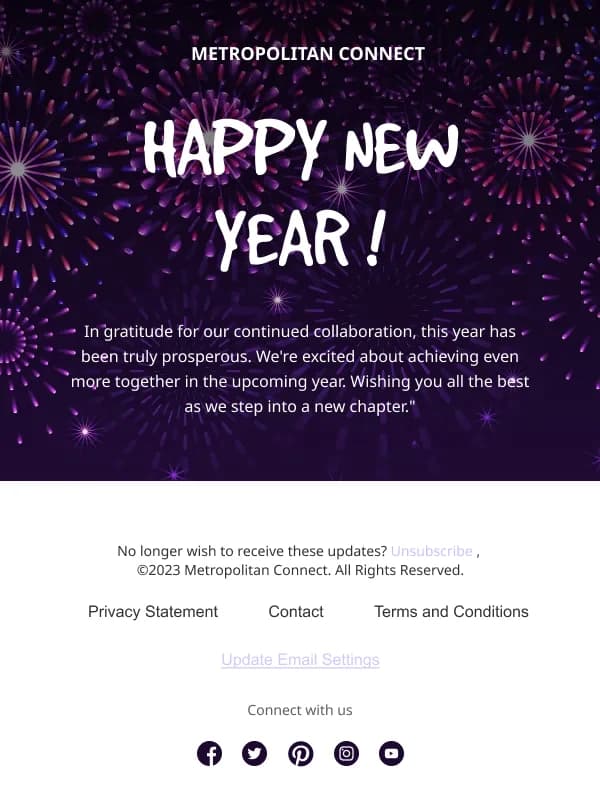
This is the reflective send, and it works when it has real content. Numbers from
your own year — units made, orders shipped, customers served, something repaired or
supported — are more interesting to read than any aspiration, and they are specific
to you in a way that seasonal language cannot be.
Design-wise it wants space: a small number of figures, set large, with one line of
context each, and a short closing note signed by a person. Restraint is the whole
effect; a review email packed with product cards is a promotion.
The forward-looking send
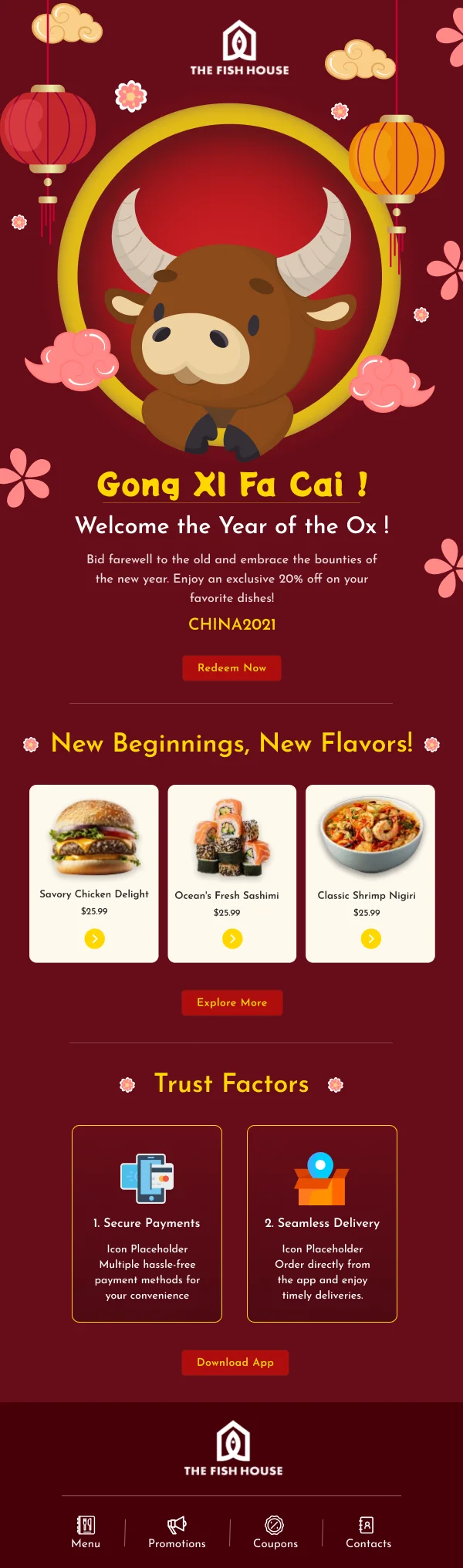
For the start of the year, the useful framing is practical rather than
aspirational. What is new, what is changing, what the reader can plan for. Dates
where you have them.
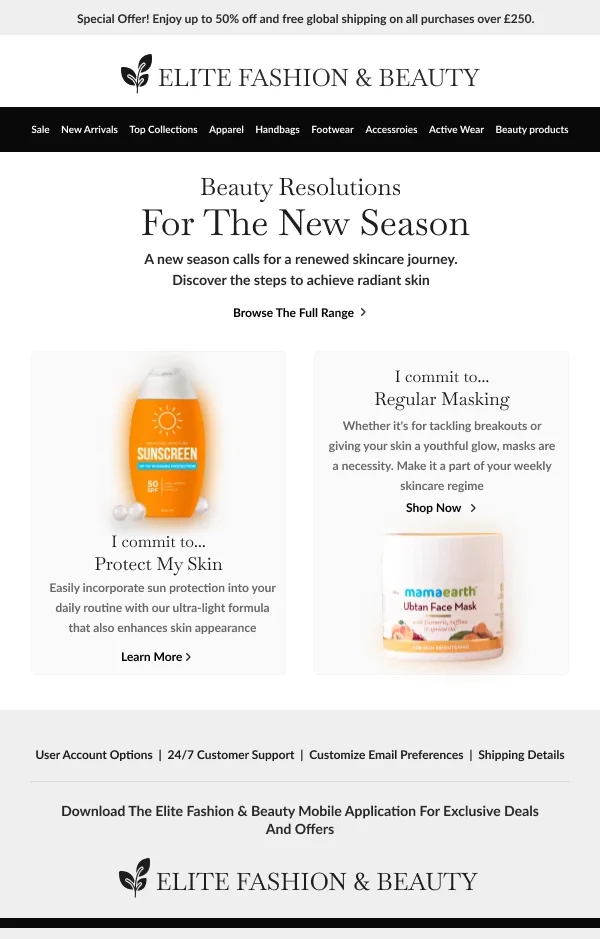
Resolution framing — new year, new you — is the most heavily used angle in the
category and consequently the weakest. Where a product genuinely serves a January
intention, it is stronger to name the specific thing than to gesture at
transformation.
January sale sends
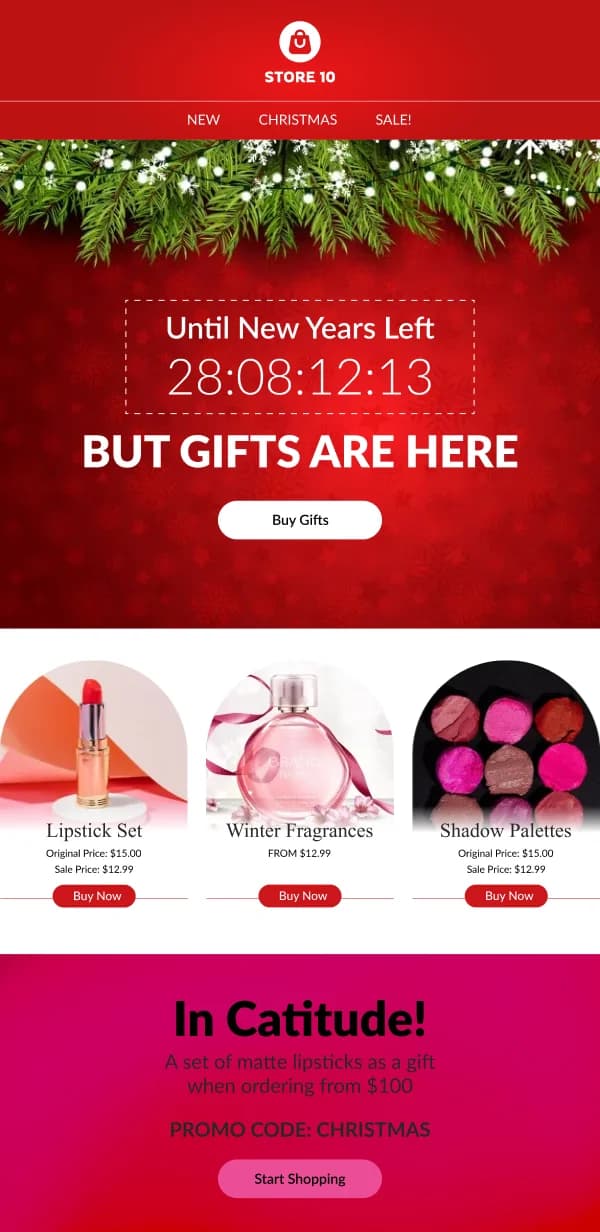
The commercial reality is that this is a clearance window, and clearance framing is
honest and effective: end of season, last sizes, making room. That reads better in
January than manufactured urgency, partly because readers have just come through six
weeks of it.
Keep the design calmer than the December sends. A quieter email stands out in a
January inbox for the same reason a loud one stood out in October.
Palette
New Year palettes default to black, gold and midnight blue, which is fine and very
common. What distinguishes a design here is usually restraint — one metallic accent
rather than three, and adequate contrast, since gold on dark is one of the most
frequently unreadable combinations in seasonal email.
Using these templates
Two registers in one collection — the reflective year-end note and the sale send — kept visually distinct on purpose. Checks: does a review email
contain real figures rather than sentiment, is the forward-looking send specific
about dates, and does the palette pass a contrast check on body copy.
Common questions
- What actually works in a New Year email?
- Specificity about the year that happened, or a concrete offer for the one starting. Generic resolution language performs poorly because every sender uses it. A real number from your own year — orders shipped, people helped, things made — is more interesting than an aspiration.
- Is a year-in-review email worth sending?
- When you have genuine numbers, yes. A short, honest summary of what the year contained reads as confident and is one of the few sends readers voluntarily read to the end. Without real figures it becomes filler.
- How does a January sale differ from a Black Friday sale?
- The audience is spent and slightly weary of being sold to. January sends do better when they are calmer and framed around usefulness or renewal rather than urgency, and clearance framing works better than manufactured scarcity.