Summer is a long window with no anchoring date, which makes it easy to send
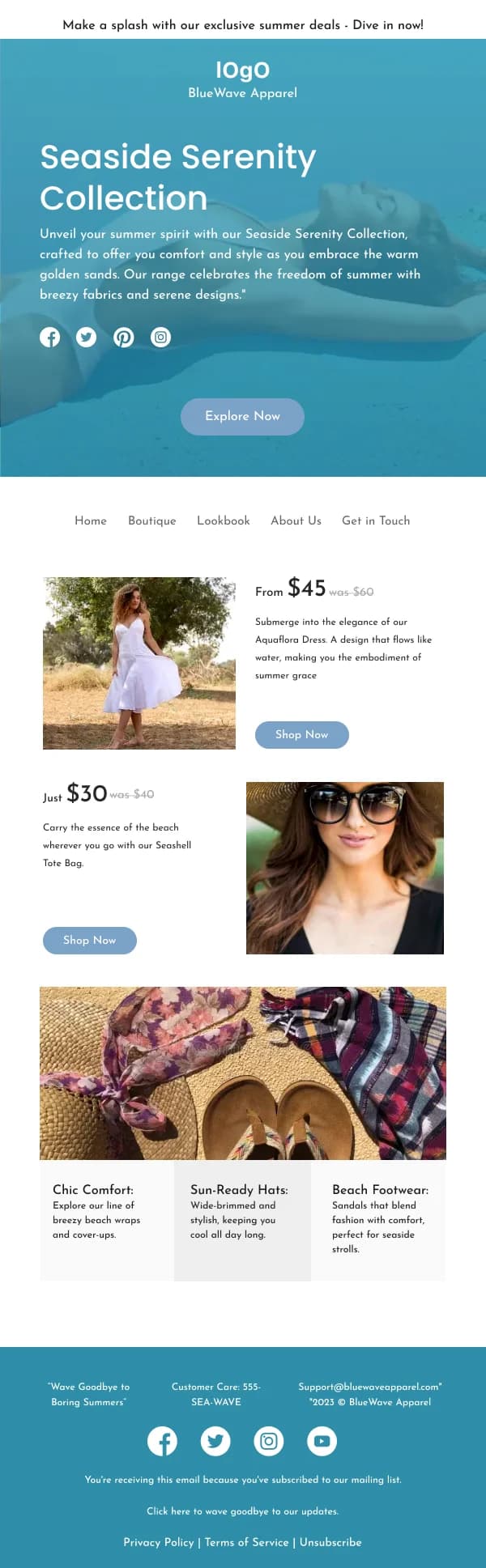
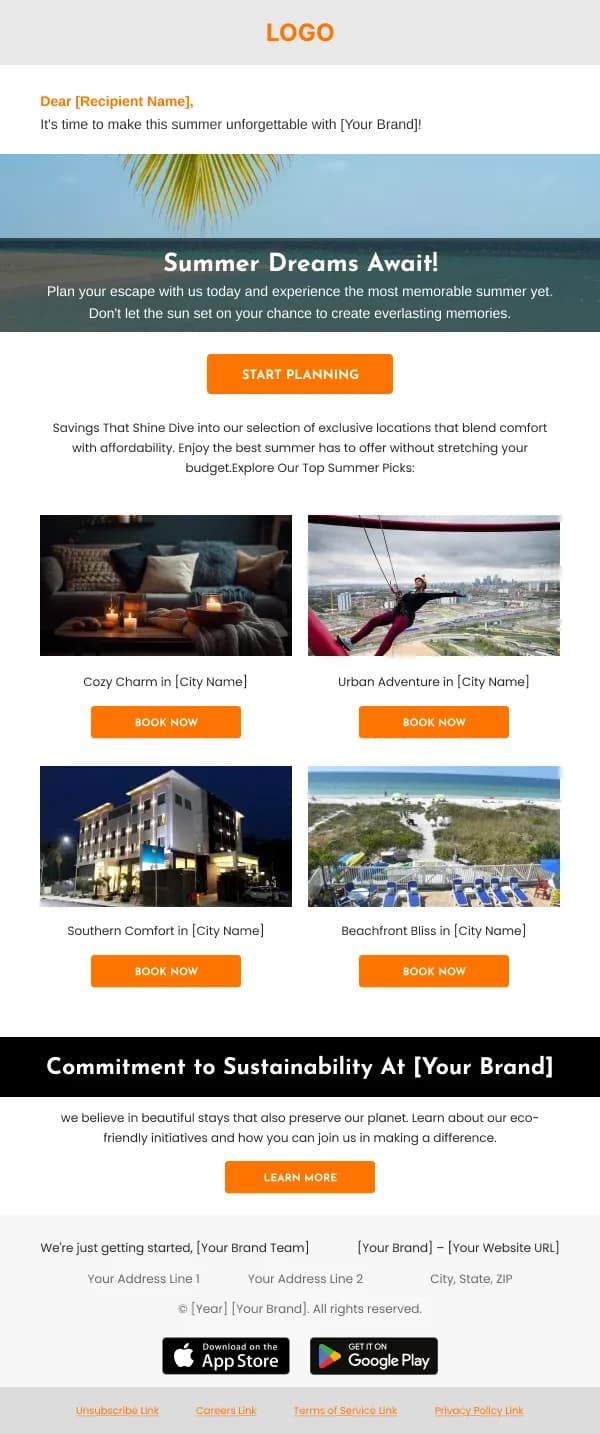
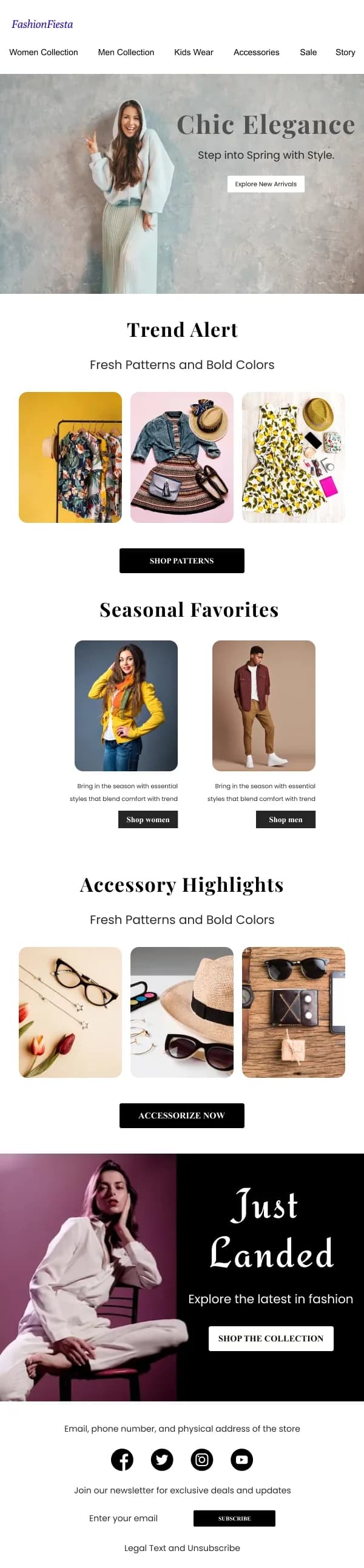
generically and hard to send well. The 8 designs in this collection lean on
specificity rather than season-as-theme.
Name the occasion
"Summer collection" is a category. "For the week you are away", "for the first warm
weekend", "for eating outside" are occasions, and occasions convert.
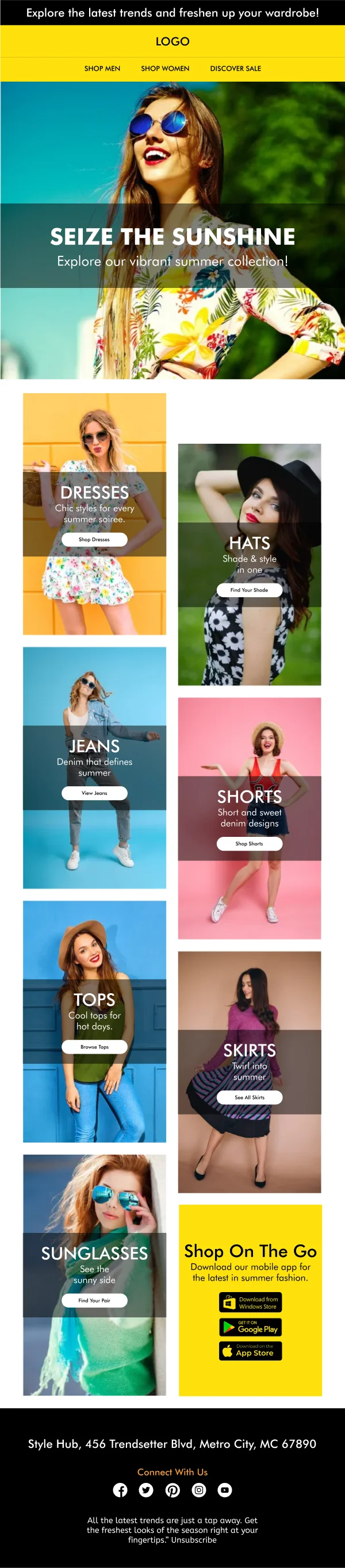
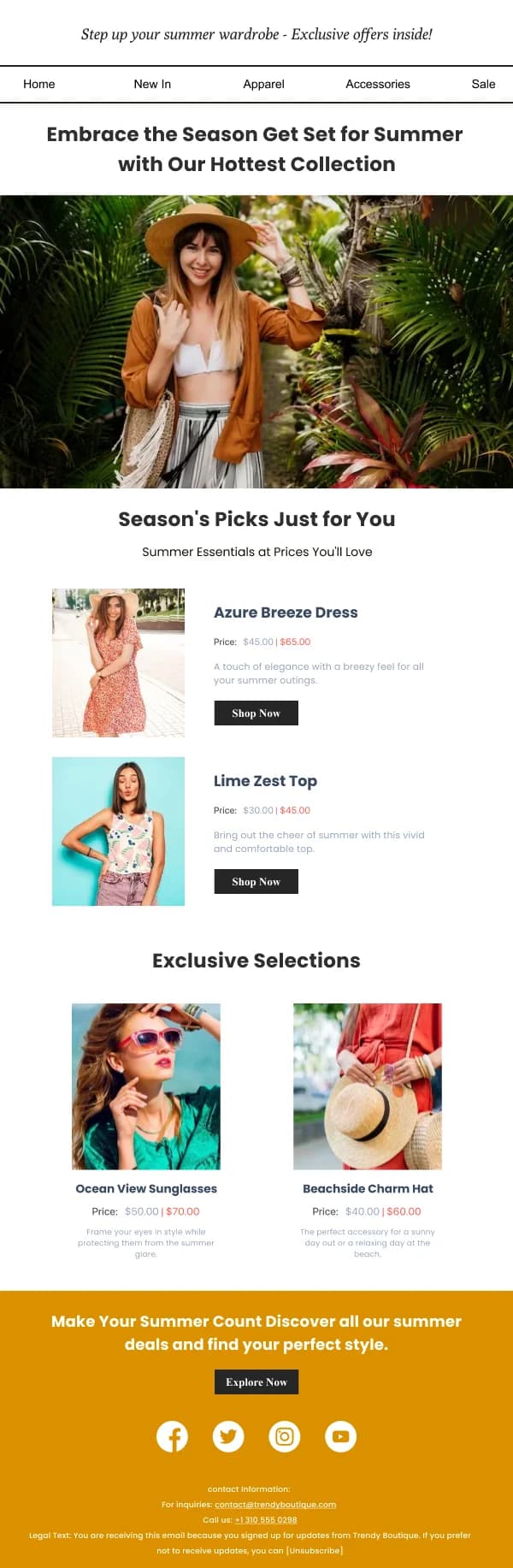
The design consequence is that the hero should show a situation rather than a
product on white — summer is one of the categories where lifestyle photography does
genuine persuasive work.
Palette and light
Summer designs go wrong by over-saturating. What tends to read well is a light,
airy base with one strong accent, generous white space, and photography with real
daylight in it rather than heavily graded warmth.
Contrast is the recurring failure: pale type on a pale background is very common in
summer email and frequently unreadable.
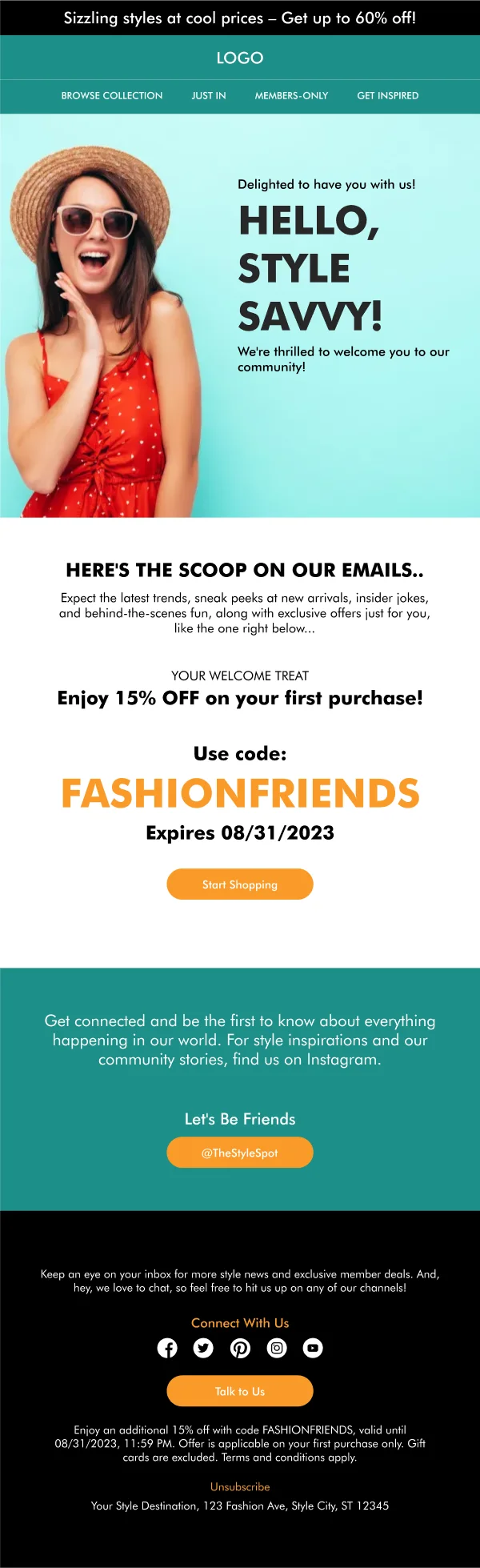
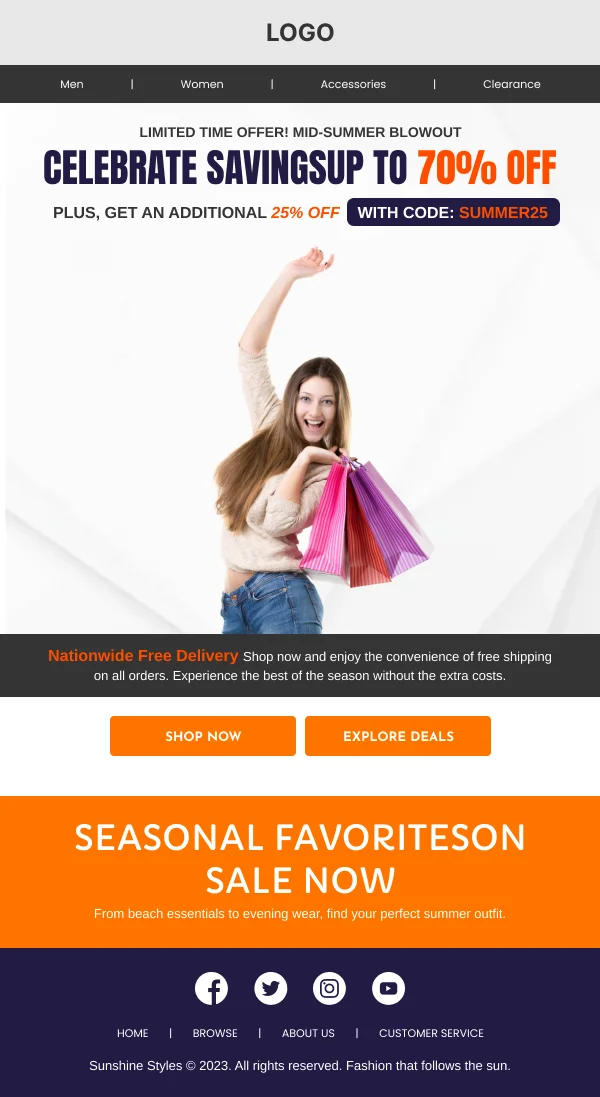
Mid-year sale
The summer sale is a clearance moment and can be framed as such. It competes with
holiday distraction rather than with other senders, which means the deadline
matters more than the discount size.
Cadence
Audiences are dispersed and away. Fewer, better-timed sends do better than
maintaining a full-year cadence through the holiday weeks.
Using these templates
Lighter palettes over the same structure as the rest of the seasonal set, so the year reads as one brand. Checks: does the send name a
specific occasion, does the imagery show a situation, and does body copy pass a
contrast check against the light palette.
Out-of-office and delayed reading
Summer is the season where a meaningful share of readers open days late, after a
holiday. That has a design consequence worth planning for: any offer with a short
window will be seen by some readers after it has expired. Stating the end date
clearly — rather than relying on "this week only" — means a late reader understands
what happened instead of clicking through to a dead offer.
Common questions
- What works in summer email?
- Light, air and a specific occasion. Summer is a long season without a fixed date, so the sends that work name a moment inside it — a holiday, a heatwave, an outdoor event — rather than gesturing at the season generally.
- Does open behaviour change in summer?
- Engagement patterns shift with holidays, and audiences are more dispersed across times and locations. That argues for fewer, better-timed sends rather than maintaining a winter cadence through August.